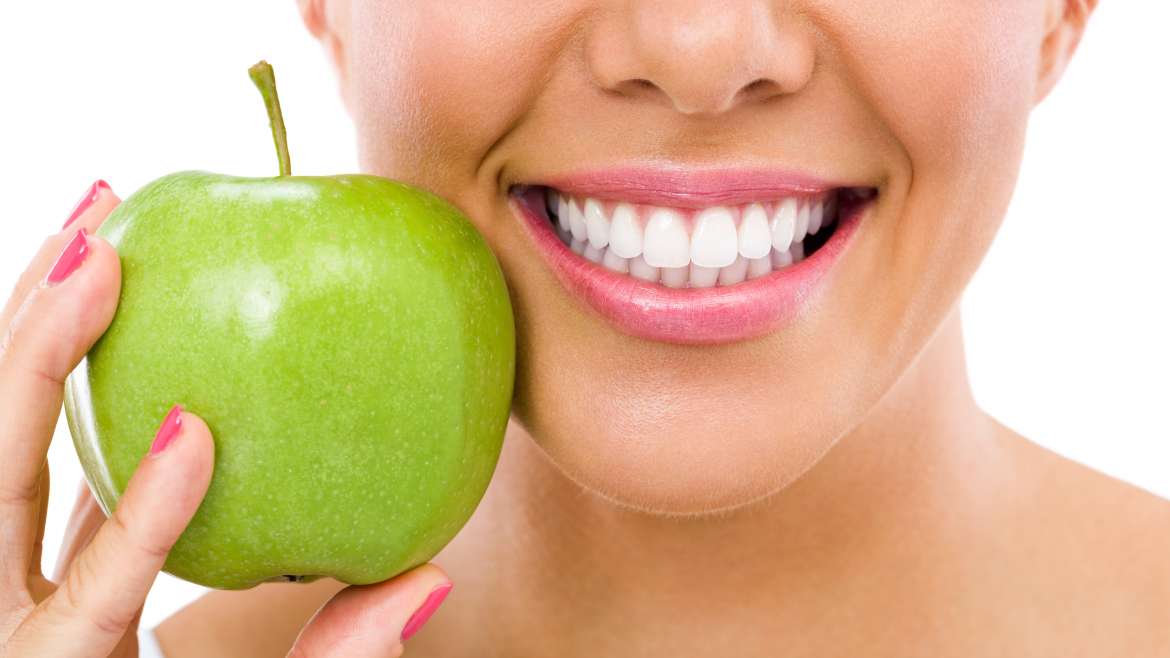
Dental aesthetics include any treatment that results in the restoration of the dental arch and in obtaining a pleasant and attractive smile. It includes techniques and procedures from several dental specialties, all aimed at improving the appearance of dental arch and/or soft gum and tissue in the oral cavity.
Smile plays an important social role. People with a smile on their lips have a greater positive effect on the environment and are better accepted by those around them. Smiles strengthen relationships, lead to good interpersonal communication, improve teamwork and even help reduce conflicts.
Dental aesthetics includes several procedures used on large scale today:
- teeth whitening
- dental facets
- gingival recontouring
- cosmetic dental fillings
- dental jewellery
Teeth whitening
Tooth colour can be affected by intrinsic dyes (tetracycline, excess fluoride) or extrinsic dyes (coffee, tobacco, tea, red wine, etc.). To correct these unwanted changes in tooth colour, rigorous hygiene and professional cleaning are insufficient. At this moment the most widely used procedure in dentistry is professional teeth whitening.
Bleaching can be done in the dental office by applying a gel activated by a light source (classical, external bleaching). Internal whitening targets coloured teeth, which have undergone endodontic treatment in the past. Teeth whitening at home is done with whitening gels for home use which are introduced into whitening gutters that are applied to the teeth for a certain period of time (depending on the gel concentration). Bleaching gutters are plastic shapes that fit over the dental arch. The mouthpieces are made individually at the dental office after the toothprint of the patient made by the dentist.
The most modern and efficient method of dental whitening, also used in the Stomalaser cabinet, is the one done with the help of a laser, a top method with great success.
Ceramic facets
Ceramic facets are extremely thin ceramic layers that are cemented to the teeth through a minimally invasive procedure. They can be used successfully when there are unsightly interdental spaces, minor and moderate dental “crushes”, low and medium intrinsic stains (tetracycline and fluorosis), teeth with unsightly shapes and sizes, dental trauma or carious lesions accompanied by moderate dental loss.